Trump Demands AI Data Centers Pay Local Energy Dividends
The administration proposes that hyperscalers return excess power and financial value to nearby residents to offset rising utility bills and environmental impacts.
By Khalid Rahman ·
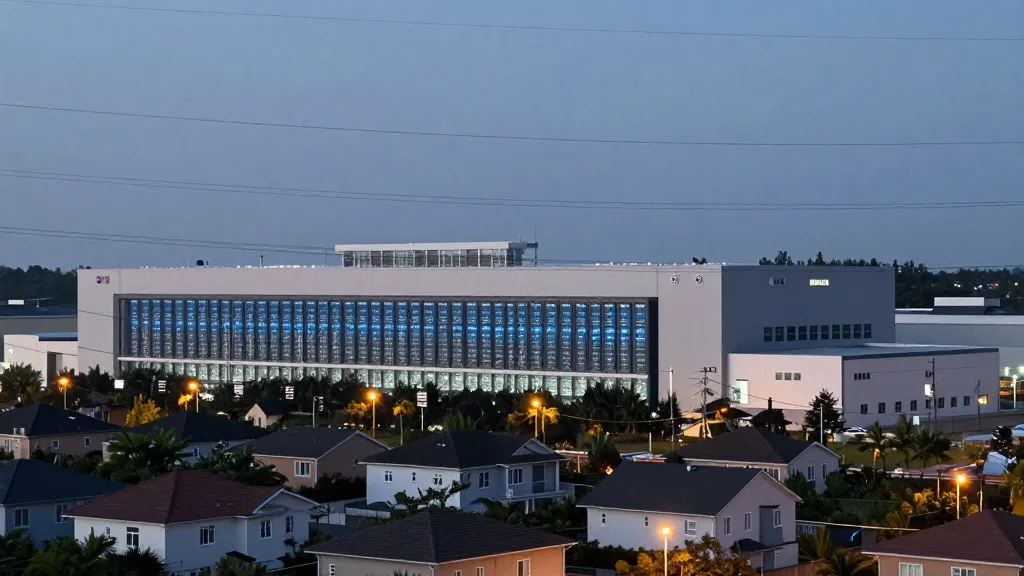
President Donald Trump has issued a directive calling for artificial intelligence data center builders to provide financial dividends to the local communities they impact. The goal of this new mandate is to mitigate the rising electricity costs that have become a primary source of friction between large-scale tech infrastructure and the neighborhoods surrounding them. By requiring these facilities to either give back excess energy or sell it at favorable rates, the administration hopes to transform data centers from unpopular industrial burdens into community assets that help stabilize or even lower local utility bills.
This move follows a period of intense public resistance across the United States. Small towns and suburban areas have frequently protested the arrival of massive AI campuses, citing a long list of grievances. Residents have pointed to significant spikes in their power bills, persistent noise from cooling systems and generators, and local water shortages as key reasons for their opposition. Air quality concerns and the visual impact of deforestation for construction sites have also fueled the discontent, making it difficult for developers to secure local approval for new projects.
The administration's strategy is designed to address these pain points directly while keeping the momentum of the U.S. AI sector ahead of China. By forcing companies to share the burden of energy costs, the government aims to win back the favor of local populations. The proposal builds on a previous order that required data center operators to generate their own electricity rather than relying solely on the existing grid. Under the new framework, any surplus power produced by these on-site generation systems could be redirected to local homes, potentially offsetting the costs associated with grid upgrades that are no longer borne by local tax bases.
In a post on Truth Social, the President emphasized the economic incentive for this arrangement. He noted that data centers, which were once viewed with skepticism in specific regions, have become highly popular when a clear financial benefit is established for the locals. The directive is framed as a practical solution to speed up construction timelines. "MAKE DEALS, and get them built!!!" Trump wrote, signaling that financial compensation is the key to unlocking stalled projects.
The concept of an "energy dividend" introduces a new layer of complexity to how we view these massive facilities. Traditionally, dividends are payments made to shareholders from profits, but here the term is being applied to a community benefit. This raises questions about the financial structure of the projects, as new data center builds often face high initial construction costs that may delay profitability for years. However, the administration argues that the immediate relief from electricity bills is a tangible benefit that outweighs long-term accounting details.
Critics, however, point out that the energy being generated in the short term is often from gas-powered generators. These units can be noisy and less efficient than conventional power plants, which may not fully satisfy residents who are already sensitive to the environmental footprint of the facilities. While the financial dividend addresses the cost of electricity, it does not directly solve issues like water consumption, ecological damage, or air pollution, which remain significant hurdles for data center acceptance.
Looking ahead, the success of this mandate will depend on how strictly it is enforced and how effectively the financial deals are structured. If the dividends are substantial enough to cover the increase in utility rates, local resistance may wane, allowing more AI infrastructure to be built. However, if the payments are perceived as a token gesture, the underlying tensions over water usage and environmental impact could continue to stall development. The administration is betting that money can buy the social license needed to power the next wave of AI innovation.
For now, the focus has shifted from simply building more data centers to building better relationships with the communities that host them. The directive sets a new standard for how hyperscalers interact with local governments and residents, suggesting that the era of free-riding on local infrastructure is over. As the U.S. races to maintain its lead in artificial intelligence, the cost of that progress is increasingly being shared with the people living next door.
Source: Tom's Hardware